In This Article
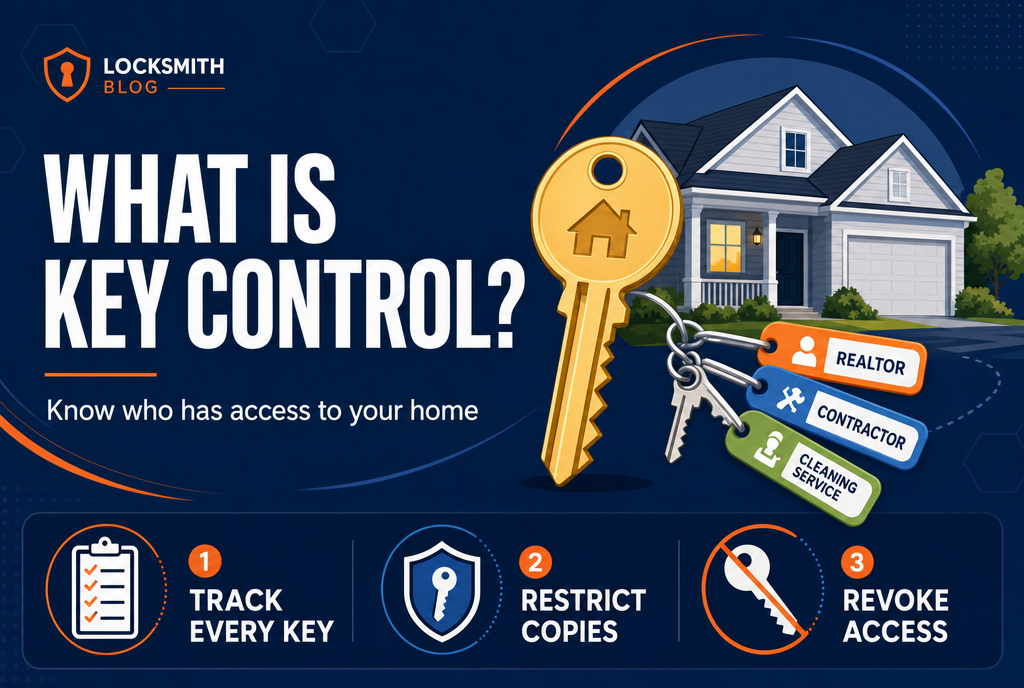
Key control is the practice of knowing exactly how many copies of your house key exist and who holds each one. A true key control system combines restricted keys that cannot be copied without your authorization, a record of every keyholder, and hardware that makes unauthorized duplication impossible.
Think about your front door key for a moment. The contractor who remodeled your kitchen had one. So did the dog sitter, the old roommate, and the neighbor who watered your plants two summers ago. If you cannot say with certainty how many copies of that key exist today, you do not have key control — and any of those copies opens your door as easily as yours does. The good news is that regaining control is a solved problem: locksmiths have been building key control systems for decades, and the same tools protect everything from single-family homes to hospitals. In this guide, our team at AZ Locksmith & Garage Repair explains how key control works, how to tell when you have lost it, and the practical steps that put every copy of your key back under your authority.
What Does Key Control Actually Mean?
Key control has a precise meaning in the locksmith trade. A professional locksmith evaluates it on three measures:
- Duplication authority. Only people you approve can get a copy made. With standard keys, anyone holding the key for five minutes can duplicate it at a kiosk. With a controlled system, duplication requires your signature, a registered card, or a patented blank that hardware stores cannot legally stock.
- Accountability. You know who holds every copy. A simple written log works for a home; businesses often pair it with an access control system that records every entry electronically.
- Revocability. When someone should no longer have access, you can actually remove it — either by collecting the key, rekeying the locks, or deactivating a code.
A house fails the first test the day it is built. Builder-grade locks use common keyways — the Kwikset KW1 and Schlage SC1 blanks sit in every hardware store in Phoenix — so any copy can spawn more copies without your knowledge. That is why key control is something you add, not something that comes with the house.
Why “Do Not Duplicate” Stamps Don’t Work
Many homeowners believe a key stamped “Do Not Duplicate” is protected. It is not. The stamp is a request, not a legal restriction, and the Associated Locksmiths of America (ALOA) has long noted that these keys are routinely copied at self-service kiosks and counters that never check. Real key control comes from patented keyways, where the blank itself is unavailable outside authorized dealers. This distinction matters when deciding what to install on your own door.
How a Key Control System Works
A residential key control system has three layers, and each one closes a different gap.
Layer 1 — Restricted or patented keyways. A high-security lock and key uses a keyway protected by an active utility patent. Blanks are distributed only to authorized locksmiths, and every duplicate requires ID and a signature that gets logged. No kiosk, no hardware store, no exceptions.
Layer 2 — Keyed-alike and master-key planning. Instead of a loose ring of unrelated keys, your locksmith keys the house so one controlled key operates the entries you choose — front door, back door, garage entry door, even the mailbox lock. Fewer keys in circulation means fewer copies to track.
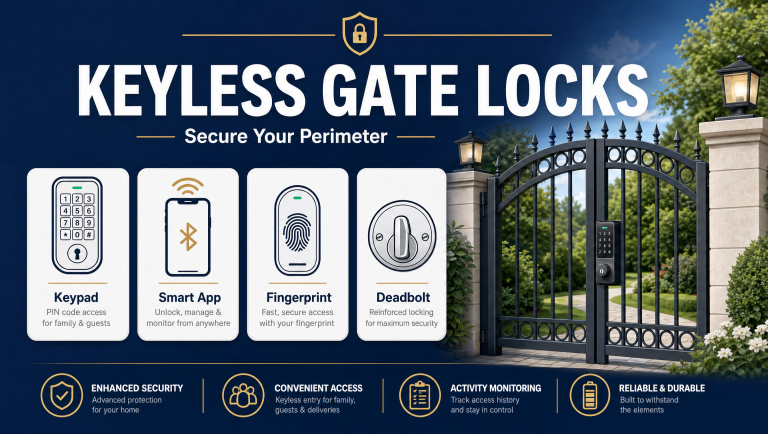
Layer 3 — Electronic credentials where they make sense. A smart lock or keyless deadbolt replaces physical copies with codes you can create and delete in seconds. Give the cleaning service its own code, watch the entry log, and delete the code the day the contract ends. For gates and side entrances, a keypad lock does the same job outdoors — our guide to keyless gate locks covers those options in detail.
Most Phoenix homes do not need all three layers on every door. A common setup pairs one high-security deadbolt on the main entry with a coded lock on the side gate, which delivers strong key control without turning your home into a bank vault.
Signs You’ve Lost Key Control
Use this quick diagnosis to check where your home stands right now.
| Situation | What It Means | Recommended Fix |
|---|---|---|
| You can’t count how many key copies exist | No accountability | Rekey, start a key log |
| A former roommate, ex, or tenant kept a key | Open revocation gap | Rekey the affected locks |
| Keys were lost or stolen | Unknown holder has access | Rekey immediately |
| Contractor or cleaner had a key for weeks | Uncontrolled duplication window | Rekey, switch to a temporary code |
| Your key says “Do Not Duplicate” only | False sense of security | Upgrade to a restricted keyway |
| Same key opens house and garage side door | One lost key exposes everything | Key-alike under a controlled blank |
| Spare key hidden outside | Anyone watching gains a copy | Remove it, install a coded lock |
| You just bought the house | Every previous holder still has access | Rekey all entries on day one |
Two of these deserve emphasis. First, a just-purchased home is the most common key control failure we see: sellers, agents, inspectors, and their contractors have all held that key. Second, a lost key ring is urgent — if it carried anything identifying your address, treat it the same way you would treat a home lockout: call a locksmith the same day.
How to Regain Key Control of Your Home
The path back to full control is shorter and cheaper than most homeowners expect.
Step 1: Rekey everything once. Rekeying swaps the pins inside your existing locks so old keys stop working — no new hardware needed. It is the single fastest reset, and our rekeying service handles a typical home in one visit. If a lock is worn or damaged, a lock change makes more sense than rekeying failing hardware.
Step 2: Upgrade the main entry to a restricted keyway. This is where key control systems earn their name. From this point forward, every duplicate of your primary key requires authorization and leaves a paper trail. Pair it with a properly installed handleset and deadbolt so the hardware matches the key’s security.
Step 3: Put temporary access on codes, not copies. House sitters, cleaners, and vacation guests get a code with an expiration date instead of metal. When the arrangement ends, access ends with it — nothing to collect, nothing left in circulation.
Step 4: Keep a simple key log. One page: who holds a key, which doors it opens, and the date issued. Review it once a year. The habit takes minutes and is the difference between guessing and knowing.
The same framework scales up for business owners. Our commercial locksmith team builds master key systems with restricted blanks for offices and retail spaces, and responds to business lockouts when a missing key becomes an emergency. That coverage extends to mortise locks, exit door push bars, and locker locks, all managed under one keying plan. And because key control extends to vehicles, our automotive locksmith crew handles car keys that disappear from the same lost key ring.
Pro Tip: Rekey to a Restricted Keyway in One Visit
Here is a detail that saves our customers money. Homeowners often rekey to standard pins after a move, then decide a year later they want restricted keys — and pay for a second service call. If you already know you want real key control, combine both steps: have the locksmith install the restricted cylinder during the initial rekey. You pay for one visit, the old keys die, and every key that exists from that day forward is logged from copy number one. That clean starting point is what makes the key log trustworthy for years.
Key Control FAQ
Answers from the AZ Locksmith & Garage Repair team
What is key control in simple terms?
Key control means you know how many copies of your key exist, who holds each one, and no new copy can be made without your approval. If you cannot answer those three questions, you do not have key control.
Can “Do Not Duplicate” keys still be copied?
Yes. The stamp is only a request, and self-service kiosks and many counters copy these keys without checking. Real duplication control requires a restricted or patented keyway available only through authorized locksmiths.
Should I rekey or replace my locks to regain key control?
Rekeying is usually enough. It changes the pins inside your existing locks so every old key stops working, at a fraction of the cost of new hardware. Replace the lock only when it is worn, damaged, or you want to upgrade the security grade.
What is a restricted keyway?
A keyway protected by an active patent, so key blanks are distributed only to authorized dealers. Every duplicate requires ID and a signature that gets logged, which makes unauthorized copies practically impossible.
Do smart locks give better key control than keys?
For temporary access, yes. Codes can be created, tracked, and deleted in seconds, and many locks log every entry. Most homes do best with a hybrid: a restricted-key deadbolt on the main entry plus coded access for guests and services.
Should I rekey after buying a house?
Always, and on day one. Sellers, agents, inspectors, and contractors have all held that key during the sale. Rekeying every exterior door is the only way to start ownership with a verified count of zero outstanding copies.
Take Back Control of Every Key to Your Home
Key control is not about paranoia — it is about replacing “probably fine” with a number you can verify. Count the copies, rekey if you cannot, put your main entry on a restricted keyway, and move temporary access onto codes. Do those four things and you will know, with certainty, who can open your door tonight.
A licensed AZ Locksmith & Garage Repair technician can assess your entries and set up a key control system in a single visit anywhere in the Phoenix area. Call (602) 806-7771 or reach us through our contact page to schedule. You can also find directions and reviews on our Google Business listing. Every door you own has a key story — make sure you are the one writing it.
Locked Out or Garage Door Stuck?
AZ Locksmith & Garage Repair · Mobile service across Phoenix, 7 days a week, 7 AM–9:30 PM.

AZ Locksmith & Garage Repair
Written by the AZ Locksmith & Garage Repair team — mobile locksmiths and garage door technicians based at 9830 S 51st St in Phoenix, AZ. We handle lockouts, rekeys, car keys, commercial hardware and garage door repair across Phoenix and the East Valley, 7 days a week.