

Professional safe cracking service in Phoenix AZ

Safe Cracking Service: What to Do When You Forget Your Safe Combination

Every year, Phoenix homeowners open a drawer, look at their safe, and realize the combination is gone — lost to a faded sticky note, a dead battery, or simply time. Attempting to force the lock yourself risks destroying both the mechanism and the valuables inside. The right call is a professional safe cracking service from a trained locksmith who can recover access without damage. In this guide, we break down exactly how the process works, which method applies to your safe type, and the mistakes you must avoid.

Understanding Your Safe: Types That Require a Safe Cracking Service

Not every safe opens the same way. A professional locksmith diagnoses the mechanism before touching a single tool. At AZ Locksmith & Garage Repair, our technicians are trained across every major residential and commercial safe category:

Combination dial safes use a rotary dial and an internal disc stack that must align at precise points. Common in homes across Ahwatukee, Glendale, and Scottsdale, these are among the most secure — and the most mishandled during DIY attempts.

Electronic keypad safes store your PIN in onboard memory. A forgotten code, a dead battery, or a lockout triggered by too many wrong entries are the three most frequent failure modes we see in residential locksmith calls.

Biometric safes use fingerprint sensors that degrade over time or struggle with dry skin — common in Arizona’s desert climate. Sensor failure is the leading cause of lockout on these units.

Fireproof and TL-rated safes feature anti-drill plates, hardened bolt work, and internal relockers. These are found in commercial environments and high-end homes, and they demand specialized tooling that no consumer hardware store carries.

Before calling our emergency locksmith team, locate your safe’s brand label and model number — this single step cuts diagnostic time significantly.

Safe Type Most Common Lockout Cause Recommended Opening Method DIY Damage Risk Technician Required
Combination Dial Forgotten combination Manipulation High Certified Safe Tech
Electronic Keypad Dead battery / forgotten PIN Override code or decoding Medium Licensed Locksmith
Biometric Fingerprint Sensor failure / data corruption Manufacturer override High Licensed Locksmith
Fireproof / TL-Rated Relocker triggered Controlled drilling + repair Very High Certified Safe Tech
Wall Safe Forgotten combination Manipulation or scoping High Certified Safe Tech
Floor Safe Combination drift Manipulation Very High Certified Safe Tech
Hotel / Travel Safe Forgotten PIN Battery pull + override Low General Locksmith

How Professional Safe Opening Actually Works

A certified safe technician follows a structured diagnostic process — not guesswork, not brute force.

Manipulation is the preferred method for combination dial safes. Using precision listening equipment, the technician detects micro-resistance points as the dial rotates and identifies the true combination without touching the lock body destructively. It takes training and patience — and it leaves the safe fully intact.

Borescope scoping involves drilling a precisely placed observation hole to view the internal disc stack directly. This is only used when manipulation fails. A skilled technician from our residential locksmith team can then plug and refinish the drill point.

Override codes and manufacturer backdoor access apply to electronic and biometric models. Many manufacturers embed emergency codes retrievable via serial number — our team maintains direct manufacturer relationships and can access these codes with proper identity verification.

Button-wear decoding is a lesser-known technique used when an electronic keypad shows visible wear patterns on specific keys, narrowing the possible combination to a small number of sequences.

All methods are designed to protect the safe’s contents and leave the locking mechanism functional wherever possible. You can visit our Phoenix location to confirm credentials and service coverage before booking.

Pro Tip: Before making any call, check your safe’s battery compartment for a factory reset sticker. Mid-range electronic safes — brands like Sentry, First Alert, and Stack-On — often ship with a 4- or 6-digit emergency override code printed on a label inside the door or behind the battery tray. It’s overlooked far more often than manufacturers would like to admit.

What Not to Do When Locked Out of Your Safe

Our emergency locksmith team sees the same DIY damage patterns every month. Here’s what to avoid absolutely:

Drilling without training. An off-center drill bit will trigger the internal relocker — a spring-loaded pin designed to permanently fuse the bolt work if tampering is detected. What was a lockout becomes a total loss.

Prying the door. Safe bodies are engineered to absorb prying force. The door frame will bend before the lock gives, leaving you with a warped unit that can’t be opened even by a professional without destruction.

Entering wrong codes repeatedly. Most electronic safes initiate penalty lockout modes after three to five failed entries. Each additional wrong attempt compounds the delay.

Following online “how-to” content. Videos filmed on consumer-grade practice units don’t transfer to real residential or commercial safes. Applying those techniques on a quality unit causes damage that turns a service call into a replacement.

For households that also need a broader home safety review — deadbolts, door hardware, thumbturn locks — our contact page lists all available services and lets you bundle a safe opening with a full security audit in one visit.

Deadbolts, Thumbturn Locks, and the Full Security Picture

A safe is one layer of a complete home safety strategy — not a standalone solution. Homeowners who call us for a safe cracking service often haven’t reviewed the rest of their door hardware in years.

A thumbturn lock on an interior door gives you single-handed locking convenience, but without a properly installed deadbolt on the exterior, that control point is undermined. The Associated Locksmiths of America (ALOA) recommends that homeowners have their safe inspected every two to three years to prevent combination drift on mechanical dials and battery failure on electronic units. The Safe and Vault Technicians Association (SAVTA) also provides certification standards that verify a technician is qualified to work on high-security units.

Our residential locksmith team regularly bundles safe service with rekeying, smart lock installation, and deadbolt security upgrades — all in one appointment.

Frequently Asked Questions — Safe Opening Service

Can a locksmith open my safe without the combination?

Yes — a certified safe technician can open virtually any combination, electronic, or biometric safe using manipulation, scoping, or manufacturer override codes. At AZ Locksmith & Garage Repair, our technicians are trained in non-destructive opening across all major residential and commercial safe models.

Will my safe be damaged during a professional opening?

In most cases, no. Dial manipulation and electronic override leave the mechanism fully intact. Scoping is a last resort, leaving only a small repairable hole. Our professional safe cracking service always prioritizes preserving both the safe and its contents.

What information should I have ready before calling?

Have your safe’s brand, model number, and serial number ready — usually found on a label inside the door. Also note the lock type and any error messages. This lets our locksmith team confirm override options before arriving on site.

Is it legal to hire a locksmith to open my own safe?

Yes — entirely legal. A reputable technician always asks for proof of ownership before starting. Our team follows all Arizona locksmith licensing regulations and documents ownership verification on every service call.

What safe brands can a professional locksmith open?

We work with Sentry, First Alert, Stack-On, Gardall, Browning, Liberty, Fort Knox, AMSEC, Mesa, and more. If you’re unsure your brand is covered, contact us with the model info and we’ll confirm before scheduling.

Should I rekey or replace my safe after opening?

For electronic safes, reset the PIN immediately after access is restored. For dial safes, our technician can set a new combination on the spot. Replacement is only needed if the mechanism was damaged. Our residential locksmith team can also assess if an upgrade is warranted.

Get Your Safe Opened by a Certified Phoenix Locksmith

Don’t let a forgotten combination turn into a destroyed safe. Our professional locksmith team at AZ Locksmith & Garage Repair uses non-destructive, manufacturer-approved techniques to recover access to combination, electronic, biometric, and fireproof safes across the entire Phoenix metro area — including Scottsdale, Mesa, Tempe, Chandler, and Gilbert.

Contact AZ Locksmith & Garage Repair today and verify our credentials on Google Maps before you call. Our certified safe technicians serve all of Maricopa County and are ready to help you regain access the right way.
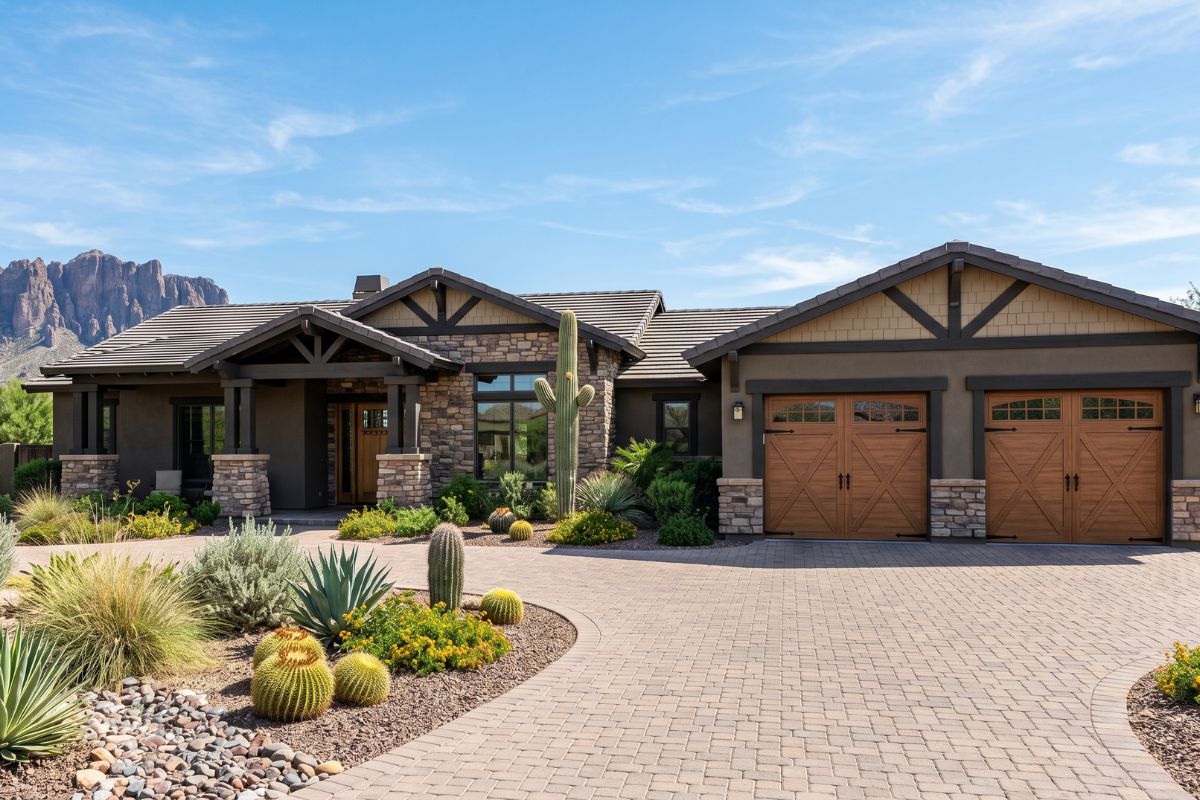
Carriage house garage doors

Carriage House Garage Doors: A Timeless Look for Your Home

Most homeowners spend years upgrading their interiors while their garage door — the largest single panel on the home’s facade — remains a plain, uninspired slab. Carriage house garage doors are the solution: they bring the warmth and character of traditional craftsmanship to modern homes, without sacrificing functionality or security. Read on to discover the styles, materials, and security hardware that turn a garage door into a defining architectural feature.

What Are Carriage House Garage Doors?

Carriage house garage doors are engineered to replicate the swing-out doors that once graced 18th- and 19th-century carriage houses. Today’s models operate on standard overhead tracks — no actual swinging — but the visual design stays faithful to the original, featuring:

  • Crossbuck overlays — the signature X-shaped panel patterns
  • Decorative hardware — strap hinges, clavos (ornamental nail heads), and door handles
  • Window inserts — arched or rectangular glass panels that admit natural light
  • Textured finishes — embossed steel or real wood that replicates timber grain

Unlike flat or standard raised-panel doors, carriage house designs introduce architectural depth that complements craftsman, colonial, farmhouse, and Spanish revival homes — all styles common throughout the Phoenix metro area. For a full overview of our installation services, visit our garage door services page. You can also find us on Google Maps to see verified reviews from homeowners across Phoenix.

Carriage House Garage Door Materials — Feature Comparison

Feature Steel (Wood-Look) Real Wood Composite / Fiberglass
Curb Appeal High Highest High
Heat & Sun Durability Excellent Moderate Good
Maintenance Required Low High Low–Medium
Insulation Options Yes (polyurethane) Limited Limited
Security Hardware Full Full Full
Weight Medium–Heavy Heavy Light–Medium
Rust / Moisture Resistance Excellent Moderate Excellent
Typical Lifespan 20–30 years 15–25 years 15–20 years
Best For Most Phoenix homes Premium custom builds Pool homes & humid zones

Carriage House Garage Doors: Materials and What to Look For

Steel with Wood-Look Finish

Steel doors with embossed wood grain textures are the most popular choice for Arizona homeowners. They resist warping and cracking in extreme heat, require minimal upkeep, and still deliver a convincing carriage house aesthetic. Manufacturers like Clopay and Wayne Dalton offer polyurethane-insulated steel carriage doors built for desert climates. Our garage door installation team can walk you through every available model and finish before you commit.

Real Wood

Genuine wood — typically cedar, redwood, or hemlock — delivers unmatched natural warmth and character. In Phoenix’s intense sun, real wood demands regular sealing and repainting to prevent warping and UV degradation. It’s a premium choice for homeowners who commit to ongoing care. The Woodworking Network provides detailed finishing guides that apply directly to wood garage door maintenance in arid climates.

Fiberglass and Composite

Composite doors made from fiber-reinforced materials offer a strong middle ground. They mimic wood’s appearance without the maintenance burden, and they’re lighter than steel — a practical advantage for homes with older opener motors. They also resist rust, which matters in homes with poolside garages. Our licensed technicians can assess your garage’s specific conditions during an on-site consultation.

Security Hardware for Carriage House Garage Doors

A carriage house door that looks stunning but isn’t properly secured is a liability, not an asset. At AZ Locksmith & Garage Repair, we frequently find that decorative handles and dummy hardware are installed with no actual locking mechanism behind them. The American National Standards Institute (ANSI) grades residential locks on a scale of 1–3, with Grade 1 being the highest residential security standard.

Deadbolt Security

A deadbolt lock is the most effective upgrade for any garage side entry or pedestrian door. A Grade 1 ANSI-rated deadbolt resists kick-in attacks and picking attempts far better than standard knob locks. Deadbolt installation must be performed by a professional locksmith who can verify proper strike plate alignment and door frame integrity — two factors that determine whether a deadbolt actually holds under force.

Thumbturn Lock Systems

A thumbturn lock lets you secure the interior garage-to-home door from the inside without a key. For added security on exterior-facing pedestrian doors, pair a thumbturn lock with a double-cylinder deadbolt so that both sides require a key.

Smart Lock Integration

Modern carriage house hardware is increasingly compatible with smart lock systems that allow keyless entry via PIN pad or smartphone app. Our team at AZ Locksmith & Garage Repair installs and programs smart locks that integrate with most major garage door opener platforms. The Associated Locksmiths of America (ALOA) recommends smart lock systems as part of a layered residential security approach.

Garage Door Lock Bar

A steel security bar that drops into a floor-mounted bracket prevents a garage door from being forced open horizontally, even if the overhead lock is compromised. This is a simple, high-impact addition to any home safety setup. Combined with a properly installed deadbolt on the pedestrian entry, it creates a two-layer physical barrier.

✅ Pro Tip from the Field: After handling hundreds of garage door hardware installs across the Phoenix area, one pattern stands out: decorative pull handles on carriage house doors are almost always the weakest point of entry. If your handle doesn’t have a working keyed cylinder behind it, replace it with a lockable handleset or add a surface-mounted deadbolt immediately. This single step addresses the most common vulnerability we encounter on carriage house door setups.

Choosing the Right Carriage House Style for Your Phoenix Home

Stile-and-rail overlays should be proportionate to the door’s width. A standard two-car door — typically 16 feet wide — looks most natural with a four-panel layout. Wider doors benefit from six-panel configurations that maintain visual balance.

Window inserts add light to the garage and break up the door’s surface. Arched-top windows pair well with Spanish colonial and craftsman homes common in Scottsdale, Chandler, and Gilbert. Square-top inserts suit contemporary or ranch-style properties. The Door & Access Systems Manufacturers Association (DASMA) publishes technical design bulletins worth reviewing before making a final selection.

Hardware finishes — matte black, oil-rubbed bronze, or brushed nickel — should coordinate with your home’s other exterior elements. Explore the full range of styles on our garage door installation page.

Why Professional Installation Matters for Home Safety

Carriage house doors are heavier than standard doors and require precise torsion spring calibration. Springs under tension store significant energy — improper adjustment is a documented cause of serious injury. Every access point introduced by a new garage door should be evaluated for home security by a trained professional.

At AZ Locksmith & Garage Repair, our licensed team handles both the mechanical installation and the complete security hardware setup in a single visit. We’re certified locksmiths trained to assess vulnerabilities most homeowners overlook. The U.S. Department of Homeland Security publishes residential security guidelines aligned with what licensed locksmiths evaluate during a proper home security assessment.

Frequently Asked Questions

Are carriage house garage doors more secure than standard doors?

The door panel itself offers similar structural protection to other steel or wood doors in its category. The real security difference comes from the hardware you pair with it. A carriage house door equipped with a Grade 1 deadbolt, reinforced strike plate, and a garage door lock bar provides substantially better protection than a standard door with only a knob lock. Our team at AZ Locksmith & Garage Repair can evaluate and upgrade your hardware during installation.

What is a thumbturn lock, and do I need one on my garage door?

A thumbturn lock is operated by a small rotating knob from the inside of the door, eliminating the need for a key from within the space. For the interior door connecting your garage to your living space, a thumbturn paired with a deadbolt on the exterior face creates a strong two-layer barrier. We install and configure thumbturn lock systems compatible with most door frames common in Phoenix homes.

Can I install a smart lock on a carriage house garage door?

Yes. Most carriage house doors have standard mortise or cylindrical bore preparations that accept smart lock hardware. Our smart lock installation service covers both the device installation and app configuration, ensuring every access credential is properly set up before we leave.

Do carriage house garage doors perform well in Phoenix’s extreme heat?

Steel carriage house doors with polyurethane insulation are specifically engineered for extreme temperatures. Insulated steel doors with reflective finishes outperform real wood and uninsulated options in Phoenix summers. Ask us about insulation R-value recommendations when you request a garage door consultation.

How do I know if my garage entry needs a deadbolt security upgrade?

If your garage pedestrian entry or the door between the garage and your home interior uses only a knob lock — no deadbolt — it is time for an upgrade. Knob locks can be defeated in seconds. A home security assessment from a licensed locksmith will identify every vulnerable entry point. Contact AZ Locksmith & Garage Repair to schedule an evaluation.

What decorative hardware finishes work best for Phoenix homes?

Matte black is the most versatile finish — it coordinates with both warm Adobe tones and cooler contemporary palettes without showing dust or sun oxidation. Oil-rubbed bronze suits Spanish colonial and Tuscan-style homes. Brushed nickel pairs well with modern or transitional architecture. Consistency with your front entry hardware creates a cohesive look across the entire facade.

Make Your Garage Door Work as Hard as It Looks

Carriage house garage doors are one of the most impactful visual upgrades available to a homeowner. But a beautiful door that isn’t properly secured leaves your property exposed. If you’re planning an upgrade — or want a security audit of your current garage entry — contact AZ Locksmith & Garage Repair today.

Our licensed professionals will evaluate your specific setup, recommend the right residential locksmith services, and make sure your new door performs as well as it looks. You can also schedule a lock rekey at the same time to unify your property’s key system.

📞 Request a consultation — and let’s build an entry point your home can be proud of.