The Benefits of Ultra-Quiet Belt Drive Openers: A Complete Guide to a Quiet Garage Door Opener

Most homeowners don’t realize their garage door opener is disturbing the whole house until a baby is asleep, someone is on a work call, or a neighbor knocks on the door at 7 a.m. The relentless rattling of a chain drive opener is one of the most common — and most tolerated — noise complaints in residential settings. Belt drive garage door openers eliminate this problem entirely, delivering smooth, whisper-level operation that modern households require. Read on to discover how this technology works, why it matters for home safety, and what a complete garage security setup actually looks like.

What Makes a Belt Drive Opener Different From a Chain Drive?

Traditional chain drive openers use a metal chain — similar in structure to a bicycle chain — to move the trolley that raises and lowers the door. The metal-on-metal contact creates vibration that travels through the ceiling, walls, and framing of the home. For attached garages, this means every operation sends a wave of mechanical noise directly into the living space.

A quiet garage door opener based on belt drive technology replaces the metal chain with a reinforced rubber or fiberglass belt, often with embedded steel cord for tensile strength. The result is a drive system with no metal contact points in the belt itself — which is where virtually all chain drive noise originates.

Leading manufacturers like LiftMaster and Chamberlain engineer their belt drive units with vibration-isolation mounting systems built into the motor head. This decouples the motor’s mechanical movement from the ceiling structure, cutting down on noise transmitted through framing into adjacent rooms. The combination of a smooth belt and an isolated motor makes belt drive units the quietest garage door opener technology currently available for residential use.

Garage Door Opener Types — Feature Comparison

Feature Belt Drive Chain Drive Screw Drive
Noise Level Lowest High Moderate
Vibration Transmission Minimal High Moderate
Maintenance Required Low Medium (lubrication) Low–Medium
Durability High High Moderate in extreme heat
Best For Attached garages, bedrooms above Detached garages, heavy doors Moderate climates
Smart Home Compatibility Full (most models) Partial Partial
Phoenix Climate Performance Excellent Excellent Reduced — heat expands screw
Vibration Isolation Option Available Limited Limited
Typical Lifespan 10–15+ years 10–15 years 8–12 years

Why a Quiet Garage Door Opener Is a Home Safety Asset

A belt drive opener is more than a comfort upgrade — it’s a meaningful home safety decision.

When an opener runs at a consistently low noise level, mechanical deviations become immediately detectable. A new scraping sound, a slight hesitation, or an unusual vibration stands out clearly against a quiet baseline. With a chain drive, these warning signs are often masked by the ambient noise of normal operation. Catching mechanical issues early — worn trolley carriages, track misalignment, binding rollers — prevents the kind of sudden failures that leave a door stuck open or partially closed.

There is also a security dimension. A properly functioning garage door opener that has been correctly installed and maintained is a hardened entry point. One that fails intermittently or operates erratically is a vulnerability. Our licensed team at AZ Locksmith & Garage Repair sees this regularly during service calls: a mechanical issue with the opener contributed to a door that wouldn’t fully close, leaving the property exposed.

For homes where the garage is attached, treating it as a secondary entry point — rather than a storage room — is the correct security posture.

Deadbolt Security, Thumbturn Locks, and Your Garage Entry Points

Installing a quiet garage door opener addresses the overhead panel. But a complete home safety plan for the garage covers two additional critical doors.

The exterior pedestrian door — the side door into the garage — is frequently the weakest link on residential properties. A knob lock alone on this door can be defeated in seconds. An ANSI Grade 1 deadbolt paired with a reinforced strike plate is the correct hardware for this entry point. Grade 1 is the highest residential security rating and what a professional locksmith will recommend for any exterior-facing garage door.

The interior connecting door — between the garage and the living space — is the last line of defense if the overhead door or pedestrian door is breached. A thumbturn lock on the interior face allows the household to secure this door from inside without a key, while a keyed deadbolt on the exterior face prevents access from the garage side. This two-cylinder configuration turns the connecting door into a genuine barrier rather than a symbolic one.

During a security walkthrough, our residential locksmith team evaluates all three points — the opener, the pedestrian door, and the connecting door — and provides a prioritized upgrade plan based on what’s actually in place.

Pro Tip from the Field: If your belt drive opener motor mounts directly against drywall with no isolation hardware, you’re leaving noise reduction performance on the table. Add rubber vibration-isolation mounts between the motor bracket and the ceiling joist. This small addition — frequently skipped during standard installation — significantly reduces sound transmission through framing into adjacent rooms. It’s especially impactful in homes with a bedroom or office directly above the garage.

Frequently Asked Questions — Quiet Garage Door Openers

Is a belt drive opener significantly quieter than a chain drive?

Yes — the difference is substantial, not marginal. Chain drives use metal-on-metal contact that transmits vibration through the ceiling into adjacent living spaces. Belt drives use a rubber or fiberglass belt with no metal contact points in the drive mechanism. In homes with bedrooms or offices directly above the garage, the noise reduction is immediately noticeable. Adding rubber vibration-isolation mounts during installation amplifies this effect further.

Do belt drive openers work well in Phoenix’s extreme heat?

Belt drive openers perform well in Phoenix’s climate. The rubber or fiberglass belt handles temperature extremes without significant expansion or degradation. Screw drive openers are more sensitive to extreme heat because thermal expansion affects the helical screw’s tolerances. For Phoenix homeowners, belt drive is one of the most appropriate opener technologies available. Our team at AZ Locksmith & Garage Repair can recommend the right model for your door weight and panel type.

What deadbolt security do I need for my garage doors?

For the exterior pedestrian door, an ANSI Grade 1 deadbolt paired with a reinforced strike plate is the correct specification. For the interior connecting door, a thumbturn lock on the inside and a keyed deadbolt on the outside creates a two-layer barrier. A professional locksmith can evaluate your existing hardware and identify what needs upgrading.

What is a thumbturn lock, and where should one be installed in a garage?

A thumbturn lock is operated by a small rotating knob from the interior side of a door — no key required from inside. For the door connecting your garage to your home’s interior, a thumbturn on the inside allows any household member to lock the door without a key, while a deadbolt cylinder on the garage-facing side requires a key to enter. This is a standard recommendation from our residential locksmith team for attached garages.

Can I integrate a smart lock with my belt drive garage door opener?

Yes. Most belt drive openers from LiftMaster and Chamberlain are compatible with smart home platforms, and the pedestrian and connecting doors can be fitted with smart locks that integrate with the same app ecosystem. Our team installs and fully configures smart lock hardware — including app pairing and access credential setup — so the system is fully operational before we leave the property.

How do I know if my current garage setup has security gaps?

The most common gaps our team finds during home security assessments in Phoenix: a pedestrian garage door secured only by a knob lock, an interior connecting door with no deadbolt, and decorative handles with no functional locking cylinder. A security walkthrough from a licensed locksmith produces a clear, prioritized list of what needs to be addressed. Contact us to schedule one.

Smart Lock Integration: Completing the Garage Security System

Belt drive openers pair naturally with smart lock installation on both the pedestrian entry and the connecting door. Keypad access, remote locking, and access event logs give homeowners clear visibility into who accesses the garage and when — without distributing physical keys.

For households managing access for contractors, housekeepers, or extended family, smart locks allow individual access codes to be created or revoked without rekeying any hardware. This is the correct access management model for a modern attached garage.

Our team at AZ Locksmith & Garage Repair installs and fully configures smart lock systems compatible with major belt drive opener platforms from LiftMaster and Chamberlain. The installation includes device setup, app pairing, and access credential configuration — the complete workflow, not just the hardware.

Why Belt Drive Installation Requires Professional Setup

A belt drive opener performs at its best only when the belt tension, rail alignment, and limit switch configuration are calibrated correctly for the specific door weight and panel type. An improperly tensioned belt will produce noise comparable to a chain drive and accelerate wear on the drive system.

Beyond alignment, the opener’s force settings must match the door’s torsion spring tension. Springs that are improperly adjusted place excess load on the motor — shortening its service life and reducing the precision of the door’s movement. Professional installation ensures every variable is set correctly from the start, so the opener performs at the level it was designed to deliver.

Our Phoenix-area customers consistently note the difference in performance between a professionally installed belt drive and a DIY setup. See verified reviews from homeowners across the metro area on our Google listing.

Make Your Garage as Quiet as It Is Secure

A belt drive opener combined with proper deadbolt security on your pedestrian and connecting doors, a configured thumbturn lock on the connecting door, and smart lock integration on the pedestrian entry creates a garage that operates quietly and holds up to scrutiny from a security standpoint. These are not independent upgrades — they work together.

If you’re planning a belt drive opener installation, or want a complete security evaluation of your current garage setup, contact AZ Locksmith & Garage Repair to schedule a consultation with our licensed team. You can also find us on the map and read verified customer reviews at our Google listing — and see firsthand what a properly secured Phoenix garage looks like.

📞 Request your consultation today — and let’s build an entry point that performs as well as it sounds.

Professional safe cracking service in Phoenix AZ

Safe Cracking Service: What to Do When You Forget Your Safe Combination

Every year, Phoenix homeowners open a drawer, look at their safe, and realize the combination is gone — lost to a faded sticky note, a dead battery, or simply time. Attempting to force the lock yourself risks destroying both the mechanism and the valuables inside. The right call is a professional safe cracking service from a trained locksmith who can recover access without damage. In this guide, we break down exactly how the process works, which method applies to your safe type, and the mistakes you must avoid.

Understanding Your Safe: Types That Require a Safe Cracking Service

Not every safe opens the same way. A professional locksmith diagnoses the mechanism before touching a single tool. At AZ Locksmith & Garage Repair, our technicians are trained across every major residential and commercial safe category:

Combination dial safes use a rotary dial and an internal disc stack that must align at precise points. Common in homes across Ahwatukee, Glendale, and Scottsdale, these are among the most secure — and the most mishandled during DIY attempts.

Electronic keypad safes store your PIN in onboard memory. A forgotten code, a dead battery, or a lockout triggered by too many wrong entries are the three most frequent failure modes we see in residential locksmith calls.

Biometric safes use fingerprint sensors that degrade over time or struggle with dry skin — common in Arizona’s desert climate. Sensor failure is the leading cause of lockout on these units.

Fireproof and TL-rated safes feature anti-drill plates, hardened bolt work, and internal relockers. These are found in commercial environments and high-end homes, and they demand specialized tooling that no consumer hardware store carries.

Before calling our emergency locksmith team, locate your safe’s brand label and model number — this single step cuts diagnostic time significantly.

Safe Type Most Common Lockout Cause Recommended Opening Method DIY Damage Risk Technician Required
Combination Dial Forgotten combination Manipulation High Certified Safe Tech
Electronic Keypad Dead battery / forgotten PIN Override code or decoding Medium Licensed Locksmith
Biometric Fingerprint Sensor failure / data corruption Manufacturer override High Licensed Locksmith
Fireproof / TL-Rated Relocker triggered Controlled drilling + repair Very High Certified Safe Tech
Wall Safe Forgotten combination Manipulation or scoping High Certified Safe Tech
Floor Safe Combination drift Manipulation Very High Certified Safe Tech
Hotel / Travel Safe Forgotten PIN Battery pull + override Low General Locksmith

How Professional Safe Opening Actually Works

A certified safe technician follows a structured diagnostic process — not guesswork, not brute force.

Manipulation is the preferred method for combination dial safes. Using precision listening equipment, the technician detects micro-resistance points as the dial rotates and identifies the true combination without touching the lock body destructively. It takes training and patience — and it leaves the safe fully intact.

Borescope scoping involves drilling a precisely placed observation hole to view the internal disc stack directly. This is only used when manipulation fails. A skilled technician from our residential locksmith team can then plug and refinish the drill point.

Override codes and manufacturer backdoor access apply to electronic and biometric models. Many manufacturers embed emergency codes retrievable via serial number — our team maintains direct manufacturer relationships and can access these codes with proper identity verification.

Button-wear decoding is a lesser-known technique used when an electronic keypad shows visible wear patterns on specific keys, narrowing the possible combination to a small number of sequences.

All methods are designed to protect the safe’s contents and leave the locking mechanism functional wherever possible. You can visit our Phoenix location to confirm credentials and service coverage before booking.

Pro Tip: Before making any call, check your safe’s battery compartment for a factory reset sticker. Mid-range electronic safes — brands like Sentry, First Alert, and Stack-On — often ship with a 4- or 6-digit emergency override code printed on a label inside the door or behind the battery tray. It’s overlooked far more often than manufacturers would like to admit.

What Not to Do When Locked Out of Your Safe

Our emergency locksmith team sees the same DIY damage patterns every month. Here’s what to avoid absolutely:

Drilling without training. An off-center drill bit will trigger the internal relocker — a spring-loaded pin designed to permanently fuse the bolt work if tampering is detected. What was a lockout becomes a total loss.

Prying the door. Safe bodies are engineered to absorb prying force. The door frame will bend before the lock gives, leaving you with a warped unit that can’t be opened even by a professional without destruction.

Entering wrong codes repeatedly. Most electronic safes initiate penalty lockout modes after three to five failed entries. Each additional wrong attempt compounds the delay.

Following online “how-to” content. Videos filmed on consumer-grade practice units don’t transfer to real residential or commercial safes. Applying those techniques on a quality unit causes damage that turns a service call into a replacement.

For households that also need a broader home safety review — deadbolts, door hardware, thumbturn locks — our contact page lists all available services and lets you bundle a safe opening with a full security audit in one visit.

Deadbolts, Thumbturn Locks, and the Full Security Picture

A safe is one layer of a complete home safety strategy — not a standalone solution. Homeowners who call us for a safe cracking service often haven’t reviewed the rest of their door hardware in years.

A thumbturn lock on an interior door gives you single-handed locking convenience, but without a properly installed deadbolt on the exterior, that control point is undermined. The Associated Locksmiths of America (ALOA) recommends that homeowners have their safe inspected every two to three years to prevent combination drift on mechanical dials and battery failure on electronic units. The Safe and Vault Technicians Association (SAVTA) also provides certification standards that verify a technician is qualified to work on high-security units.

Our residential locksmith team regularly bundles safe service with rekeying, smart lock installation, and deadbolt security upgrades — all in one appointment.

Frequently Asked Questions — Safe Opening Service

Can a locksmith open my safe without the combination?

Yes — a certified safe technician can open virtually any combination, electronic, or biometric safe using manipulation, scoping, or manufacturer override codes. At AZ Locksmith & Garage Repair, our technicians are trained in non-destructive opening across all major residential and commercial safe models.

Will my safe be damaged during a professional opening?

In most cases, no. Dial manipulation and electronic override leave the mechanism fully intact. Scoping is a last resort, leaving only a small repairable hole. Our professional safe cracking service always prioritizes preserving both the safe and its contents.

What information should I have ready before calling?

Have your safe’s brand, model number, and serial number ready — usually found on a label inside the door. Also note the lock type and any error messages. This lets our locksmith team confirm override options before arriving on site.

Is it legal to hire a locksmith to open my own safe?

Yes — entirely legal. A reputable technician always asks for proof of ownership before starting. Our team follows all Arizona locksmith licensing regulations and documents ownership verification on every service call.

What safe brands can a professional locksmith open?

We work with Sentry, First Alert, Stack-On, Gardall, Browning, Liberty, Fort Knox, AMSEC, Mesa, and more. If you’re unsure your brand is covered, contact us with the model info and we’ll confirm before scheduling.

Should I rekey or replace my safe after opening?

For electronic safes, reset the PIN immediately after access is restored. For dial safes, our technician can set a new combination on the spot. Replacement is only needed if the mechanism was damaged. Our residential locksmith team can also assess if an upgrade is warranted.

Get Your Safe Opened by a Certified Phoenix Locksmith

Don’t let a forgotten combination turn into a destroyed safe. Our professional locksmith team at AZ Locksmith & Garage Repair uses non-destructive, manufacturer-approved techniques to recover access to combination, electronic, biometric, and fireproof safes across the entire Phoenix metro area — including Scottsdale, Mesa, Tempe, Chandler, and Gilbert.

Contact AZ Locksmith & Garage Repair today and verify our credentials on Google Maps before you call. Our certified safe technicians serve all of Maricopa County and are ready to help you regain access the right way.

Master key system for home

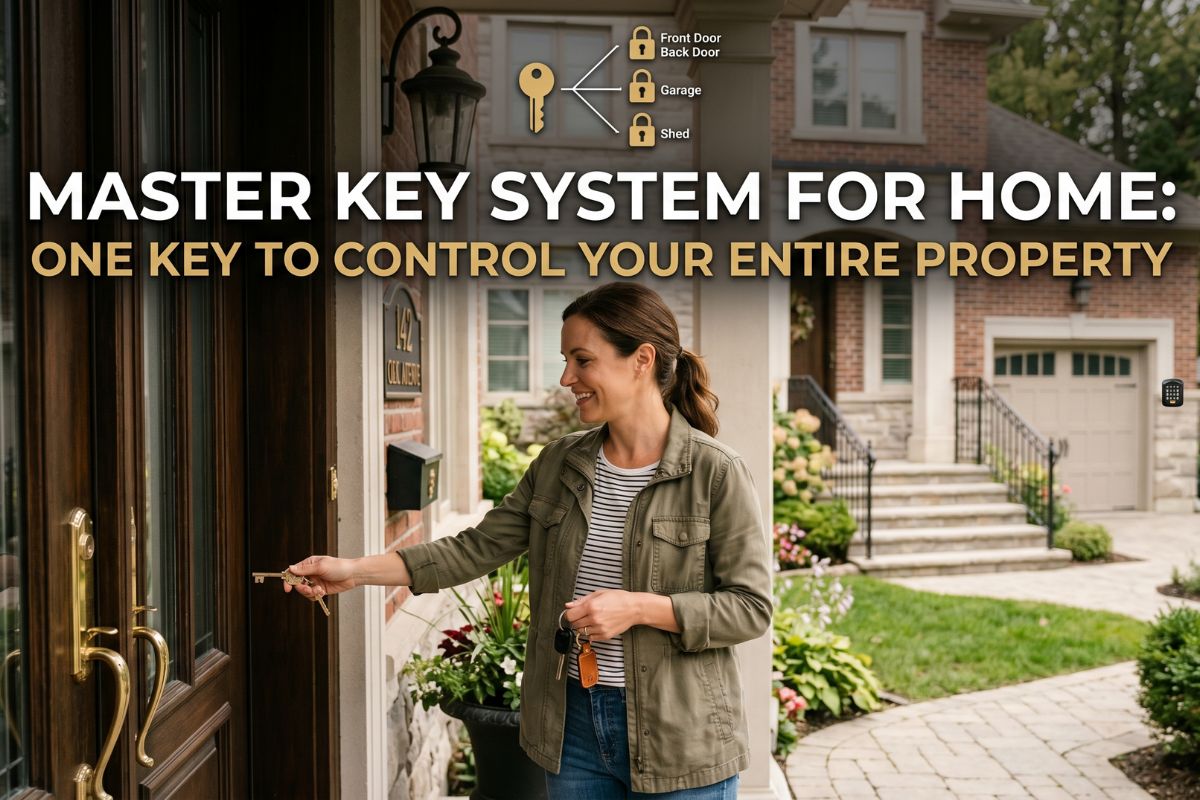
Master Key System for Home: One Key to Control Your Entire Property

Juggling separate keys for the front door, back door, garage entry, and side gate quickly turns into a cluttered keyring and a frustrating daily routine. When one of those keys goes missing, every lock suddenly feels vulnerable, and most Phoenix homeowners eventually ask if there’s a smarter way to manage access across their property. A master key system for home use is exactly that solution, allowing one single key to operate every lock on your home while still permitting individual keys for specific doors. Keep reading to learn how this setup works, how it pairs with modern deadbolt security, and how our professional locksmith team helps Arizona households upgrade without compromising home safety.

What Is a Master Key System and How Does It Work?

A master key system for home use is a carefully pinned lock configuration that allows a single “master” key to open multiple locks, while each lock also accepts its own unique “change” key. Inside each cylinder, the locksmith adds an additional wafer or pin known as a master wafer, creating two valid shear lines instead of one. That small mechanical adjustment is what makes the entire hierarchy possible.

As a professional locksmith team serving Phoenix homes, we see this configuration most often in properties with detached casitas, pool houses, guest suites, or home offices. The homeowner carries one master key that opens every lock on the property, while a housekeeper, nanny, or tenant may carry a change key that only opens specific doors. The result is controlled access without a heavy keyring weighing down your pocket.

The Real Convenience Behind One Key for Your Entire House

Master key system for home Phoenix locksmith

Convenience is the most immediate benefit, but it isn’t the only one. With a unified home master key system, you no longer need to fumble through keys in the dark, label them with colored caps, or keep spare sets hidden in flowerpots. Our technicians have rekeyed hundreds of Phoenix households, and the feedback is consistent: homeowners feel more in control of their property when one key handles everything from the garage side door to the back patio slider.

Beyond daily ease, this approach improves home safety in ways that matter during an emergency. If a family member needs to grab something from the garage or let a trusted neighbor into a guest room, any authorized key works across the property. You can also upgrade the entire system as a single cohesive unit rather than tracking which lock was last serviced.

Master Key Systems vs. Standard Rekeying vs. Smart Locks

Homeowners sometimes confuse a master key system with a simple lock rekey service. The two are related, but not identical. Smart locks add another layer of comparison, since many households are weighing mechanical versus digital options. The table below breaks down the key differences so you can see where a master key system fits into your home security plan.

Feature Master Key System Standard Rekey Smart Lock
One Key for All Doors Yes No Partial (via app)
Tiered Access Levels Yes No Yes
Mechanical Dependability High High Medium
Battery Required No No Yes
Works During Power Outage Yes Yes Limited
Ideal For Multi-Door Homes Excellent Basic Good
Resistant to App/Firmware Issues Yes Yes No
Recommended Hardware Grade Grade 1 / Grade 2 Grade 2 / Grade 3 Grade 2

A master key system delivers the best of both worlds: mechanical dependability combined with tiered access that most smart systems can’t replicate without app dependencies and firmware updates.

Deadbolt Security and the Role of the Thumbturn Lock

A master key system is only as strong as the hardware it’s built into. That’s why we recommend pairing the configuration with Grade 1 or Grade 2 deadbolts on every exterior door. Deadbolt security matters here because a master-keyed cylinder still relies on the bolt to resist kick-ins, prying, and bump attacks.

The thumbturn lock on the interior side of the deadbolt also plays an important role. A solid-metal thumbturn paired with a reinforced strike plate prevents someone from reaching through a broken sidelight window and turning the bolt by hand. When we install a residential master key system in Phoenix, we inspect each thumbturn, strike plate, and door frame before pinning the cylinders, because the mechanical chain is only as strong as its weakest link.

Pro Tip: Plan the Key Hierarchy Before the Locksmith Arrives

After pinning thousands of Phoenix homes, our team has learned that the most successful installations start with a written key map. Before the locksmith arrives, walk through your property and list every door that locks. Next to each door, decide three things: who should have access with a personal change key, which doors the master key must open, and which doors should also accept a secondary “sub-master” for extended family or service providers.

This short exercise prevents rework, keeps cylinder pinning consistent, and ensures the hierarchy matches how your household actually lives. Our certified technicians are also happy to walk through this plan with you during the initial consultation — it’s part of the service we provide for every home security upgrade.

Common Mistakes Homeowners Make

Even a well-designed system can fall short if the basics are overlooked. Two issues we frequently correct in Phoenix homes stand out. First, many properties still use builder-grade locks, and the original hardware installed by most homebuilders is not designed for master keying. We typically replace those cylinders with higher-grade commercial-residential hybrids that hold pinning tolerances correctly.

Second, Arizona properties often have a side gate, pool gate, or shed padlock that gets forgotten during the master-keying process, leaving a weak point in the home safety chain. Our Phoenix locksmith team covers every access point during the audit, including garage man-doors, sheds, and gate padlocks that accept key-in-knob cylinders.

Frequently Asked Questions

Is a master key system for home use as secure as individual locks?
Yes. When installed with Grade 1 or Grade 2 deadbolts and reinforced strike plates, a master key system maintains the same pick and bump resistance as standard residential locks while offering more flexible access control.
Can any existing lock be converted to a master key system?
Most brand-name residential cylinders can be master-keyed, but builder-grade locks often lack the pinning tolerances required. A professional locksmith will inspect your current hardware and recommend replacements where needed.
What happens if I lose the master key?
If the master key is lost, we recommend rekeying the entire system to maintain full home safety. This resets the master and change key combinations so the missing key no longer functions on any door.
Does a master key system work with a thumbturn lock?
Absolutely. The thumbturn lock operates the interior side of the deadbolt and is independent of the keyway. Your master key controls the exterior cylinder while the thumbturn continues to work normally from inside.
How many doors can a single master key open?
A standard residential master key system comfortably handles up to 15 doors. Larger properties with multiple outbuildings, casitas, or guest suites can be scaled up with sub-master keys organized into logical zones.
Do I need a professional locksmith to install it?
Yes. Master keying requires precise cylinder pinning and a written key schedule. A certified locksmith ensures the hierarchy is built correctly and that every lock maintains its intended deadbolt security rating.

Ready to Simplify and Secure Your Home?

One key, one cohesive system, one locksmith partner who understands Arizona homes. If you’re considering a master key system for home access, or simply want a straightforward home security audit, reach out to our certified professional locksmith team. We’ll walk your property, review your current hardware, and design a key hierarchy that fits how your family actually uses the space.

Schedule a consultation with AZ Locksmith & Garage Repair or visit our local Google Maps listing to see verified reviews from Phoenix homeowners who’ve already upgraded their home safety with us.