
Professional safe cracking service in Phoenix AZ

Safe Cracking Service: What to Do When You Forget Your Safe Combination

Every year, Phoenix homeowners open a drawer, look at their safe, and realize the combination is gone — lost to a faded sticky note, a dead battery, or simply time. Attempting to force the lock yourself risks destroying both the mechanism and the valuables inside. The right call is a professional safe cracking service from a trained locksmith who can recover access without damage. In this guide, we break down exactly how the process works, which method applies to your safe type, and the mistakes you must avoid.

Understanding Your Safe: Types That Require a Safe Cracking Service

Not every safe opens the same way. A professional locksmith diagnoses the mechanism before touching a single tool. At AZ Locksmith & Garage Repair, our technicians are trained across every major residential and commercial safe category:

Combination dial safes use a rotary dial and an internal disc stack that must align at precise points. Common in homes across Ahwatukee, Glendale, and Scottsdale, these are among the most secure — and the most mishandled during DIY attempts.

Electronic keypad safes store your PIN in onboard memory. A forgotten code, a dead battery, or a lockout triggered by too many wrong entries are the three most frequent failure modes we see in residential locksmith calls.

Biometric safes use fingerprint sensors that degrade over time or struggle with dry skin — common in Arizona’s desert climate. Sensor failure is the leading cause of lockout on these units.

Fireproof and TL-rated safes feature anti-drill plates, hardened bolt work, and internal relockers. These are found in commercial environments and high-end homes, and they demand specialized tooling that no consumer hardware store carries.

Before calling our emergency locksmith team, locate your safe’s brand label and model number — this single step cuts diagnostic time significantly.

Safe Type Most Common Lockout Cause Recommended Opening Method DIY Damage Risk Technician Required
Combination Dial Forgotten combination Manipulation High Certified Safe Tech
Electronic Keypad Dead battery / forgotten PIN Override code or decoding Medium Licensed Locksmith
Biometric Fingerprint Sensor failure / data corruption Manufacturer override High Licensed Locksmith
Fireproof / TL-Rated Relocker triggered Controlled drilling + repair Very High Certified Safe Tech
Wall Safe Forgotten combination Manipulation or scoping High Certified Safe Tech
Floor Safe Combination drift Manipulation Very High Certified Safe Tech
Hotel / Travel Safe Forgotten PIN Battery pull + override Low General Locksmith

How Professional Safe Opening Actually Works

A certified safe technician follows a structured diagnostic process — not guesswork, not brute force.

Manipulation is the preferred method for combination dial safes. Using precision listening equipment, the technician detects micro-resistance points as the dial rotates and identifies the true combination without touching the lock body destructively. It takes training and patience — and it leaves the safe fully intact.

Borescope scoping involves drilling a precisely placed observation hole to view the internal disc stack directly. This is only used when manipulation fails. A skilled technician from our residential locksmith team can then plug and refinish the drill point.

Override codes and manufacturer backdoor access apply to electronic and biometric models. Many manufacturers embed emergency codes retrievable via serial number — our team maintains direct manufacturer relationships and can access these codes with proper identity verification.

Button-wear decoding is a lesser-known technique used when an electronic keypad shows visible wear patterns on specific keys, narrowing the possible combination to a small number of sequences.

All methods are designed to protect the safe’s contents and leave the locking mechanism functional wherever possible. You can visit our Phoenix location to confirm credentials and service coverage before booking.

Pro Tip: Before making any call, check your safe’s battery compartment for a factory reset sticker. Mid-range electronic safes — brands like Sentry, First Alert, and Stack-On — often ship with a 4- or 6-digit emergency override code printed on a label inside the door or behind the battery tray. It’s overlooked far more often than manufacturers would like to admit.

What Not to Do When Locked Out of Your Safe

Our emergency locksmith team sees the same DIY damage patterns every month. Here’s what to avoid absolutely:

Drilling without training. An off-center drill bit will trigger the internal relocker — a spring-loaded pin designed to permanently fuse the bolt work if tampering is detected. What was a lockout becomes a total loss.

Prying the door. Safe bodies are engineered to absorb prying force. The door frame will bend before the lock gives, leaving you with a warped unit that can’t be opened even by a professional without destruction.

Entering wrong codes repeatedly. Most electronic safes initiate penalty lockout modes after three to five failed entries. Each additional wrong attempt compounds the delay.

Following online “how-to” content. Videos filmed on consumer-grade practice units don’t transfer to real residential or commercial safes. Applying those techniques on a quality unit causes damage that turns a service call into a replacement.

For households that also need a broader home safety review — deadbolts, door hardware, thumbturn locks — our contact page lists all available services and lets you bundle a safe opening with a full security audit in one visit.

Deadbolts, Thumbturn Locks, and the Full Security Picture

A safe is one layer of a complete home safety strategy — not a standalone solution. Homeowners who call us for a safe cracking service often haven’t reviewed the rest of their door hardware in years.

A thumbturn lock on an interior door gives you single-handed locking convenience, but without a properly installed deadbolt on the exterior, that control point is undermined. The Associated Locksmiths of America (ALOA) recommends that homeowners have their safe inspected every two to three years to prevent combination drift on mechanical dials and battery failure on electronic units. The Safe and Vault Technicians Association (SAVTA) also provides certification standards that verify a technician is qualified to work on high-security units.

Our residential locksmith team regularly bundles safe service with rekeying, smart lock installation, and deadbolt security upgrades — all in one appointment.

Frequently Asked Questions — Safe Opening Service

Can a locksmith open my safe without the combination?

Yes — a certified safe technician can open virtually any combination, electronic, or biometric safe using manipulation, scoping, or manufacturer override codes. At AZ Locksmith & Garage Repair, our technicians are trained in non-destructive opening across all major residential and commercial safe models.

Will my safe be damaged during a professional opening?

In most cases, no. Dial manipulation and electronic override leave the mechanism fully intact. Scoping is a last resort, leaving only a small repairable hole. Our professional safe cracking service always prioritizes preserving both the safe and its contents.

What information should I have ready before calling?

Have your safe’s brand, model number, and serial number ready — usually found on a label inside the door. Also note the lock type and any error messages. This lets our locksmith team confirm override options before arriving on site.

Is it legal to hire a locksmith to open my own safe?

Yes — entirely legal. A reputable technician always asks for proof of ownership before starting. Our team follows all Arizona locksmith licensing regulations and documents ownership verification on every service call.

What safe brands can a professional locksmith open?

We work with Sentry, First Alert, Stack-On, Gardall, Browning, Liberty, Fort Knox, AMSEC, Mesa, and more. If you’re unsure your brand is covered, contact us with the model info and we’ll confirm before scheduling.

Should I rekey or replace my safe after opening?

For electronic safes, reset the PIN immediately after access is restored. For dial safes, our technician can set a new combination on the spot. Replacement is only needed if the mechanism was damaged. Our residential locksmith team can also assess if an upgrade is warranted.

Get Your Safe Opened by a Certified Phoenix Locksmith

Don’t let a forgotten combination turn into a destroyed safe. Our professional locksmith team at AZ Locksmith & Garage Repair uses non-destructive, manufacturer-approved techniques to recover access to combination, electronic, biometric, and fireproof safes across the entire Phoenix metro area — including Scottsdale, Mesa, Tempe, Chandler, and Gilbert.

Contact AZ Locksmith & Garage Repair today and verify our credentials on Google Maps before you call. Our certified safe technicians serve all of Maricopa County and are ready to help you regain access the right way.
Master key system for home

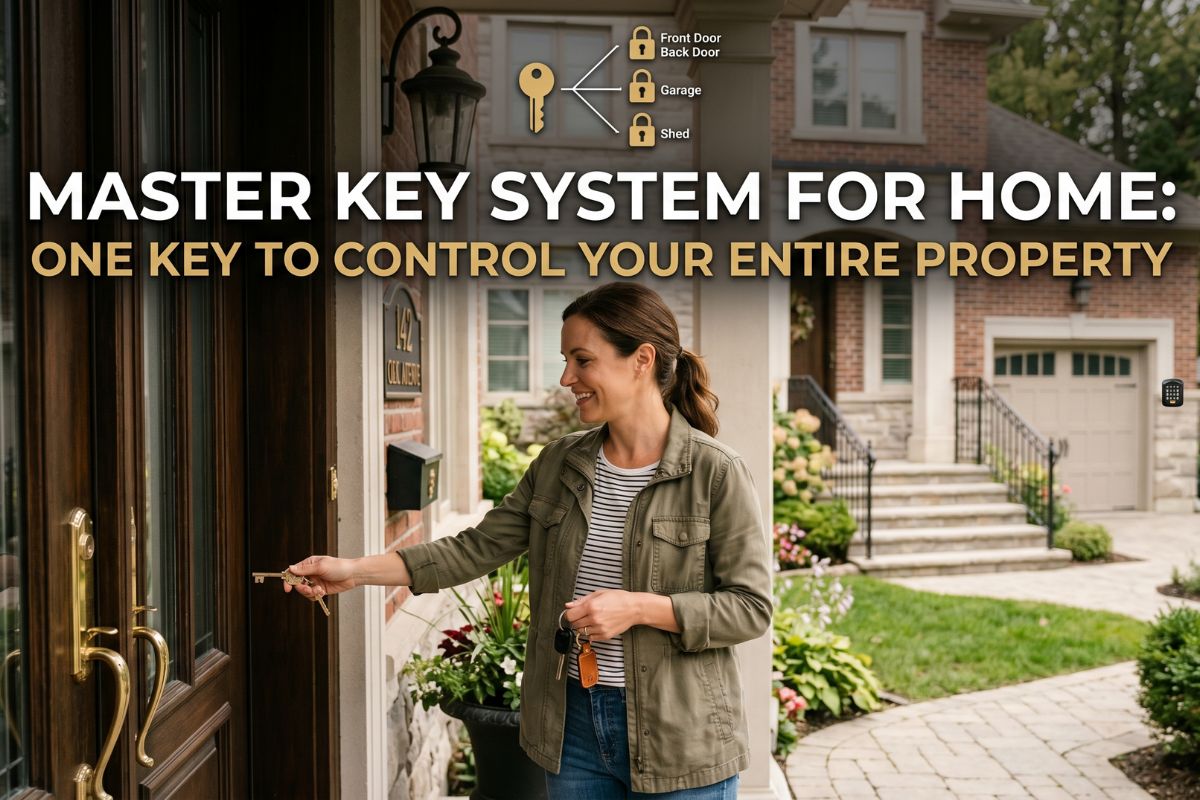
Master Key System for Home: One Key to Control Your Entire Property

Juggling separate keys for the front door, back door, garage entry, and side gate quickly turns into a cluttered keyring and a frustrating daily routine. When one of those keys goes missing, every lock suddenly feels vulnerable, and most Phoenix homeowners eventually ask if there’s a smarter way to manage access across their property. A master key system for home use is exactly that solution, allowing one single key to operate every lock on your home while still permitting individual keys for specific doors. Keep reading to learn how this setup works, how it pairs with modern deadbolt security, and how our professional locksmith team helps Arizona households upgrade without compromising home safety.

What Is a Master Key System and How Does It Work?

A master key system for home use is a carefully pinned lock configuration that allows a single “master” key to open multiple locks, while each lock also accepts its own unique “change” key. Inside each cylinder, the locksmith adds an additional wafer or pin known as a master wafer, creating two valid shear lines instead of one. That small mechanical adjustment is what makes the entire hierarchy possible.

As a professional locksmith team serving Phoenix homes, we see this configuration most often in properties with detached casitas, pool houses, guest suites, or home offices. The homeowner carries one master key that opens every lock on the property, while a housekeeper, nanny, or tenant may carry a change key that only opens specific doors. The result is controlled access without a heavy keyring weighing down your pocket.

The Real Convenience Behind One Key for Your Entire House

Master key system for home Phoenix locksmith

Convenience is the most immediate benefit, but it isn’t the only one. With a unified home master key system, you no longer need to fumble through keys in the dark, label them with colored caps, or keep spare sets hidden in flowerpots. Our technicians have rekeyed hundreds of Phoenix households, and the feedback is consistent: homeowners feel more in control of their property when one key handles everything from the garage side door to the back patio slider.

Beyond daily ease, this approach improves home safety in ways that matter during an emergency. If a family member needs to grab something from the garage or let a trusted neighbor into a guest room, any authorized key works across the property. You can also upgrade the entire system as a single cohesive unit rather than tracking which lock was last serviced.

Master Key Systems vs. Standard Rekeying vs. Smart Locks

Homeowners sometimes confuse a master key system with a simple lock rekey service. The two are related, but not identical. Smart locks add another layer of comparison, since many households are weighing mechanical versus digital options. The table below breaks down the key differences so you can see where a master key system fits into your home security plan.

Feature Master Key System Standard Rekey Smart Lock
One Key for All Doors Yes No Partial (via app)
Tiered Access Levels Yes No Yes
Mechanical Dependability High High Medium
Battery Required No No Yes
Works During Power Outage Yes Yes Limited
Ideal For Multi-Door Homes Excellent Basic Good
Resistant to App/Firmware Issues Yes Yes No
Recommended Hardware Grade Grade 1 / Grade 2 Grade 2 / Grade 3 Grade 2

A master key system delivers the best of both worlds: mechanical dependability combined with tiered access that most smart systems can’t replicate without app dependencies and firmware updates.

Deadbolt Security and the Role of the Thumbturn Lock

A master key system is only as strong as the hardware it’s built into. That’s why we recommend pairing the configuration with Grade 1 or Grade 2 deadbolts on every exterior door. Deadbolt security matters here because a master-keyed cylinder still relies on the bolt to resist kick-ins, prying, and bump attacks.

The thumbturn lock on the interior side of the deadbolt also plays an important role. A solid-metal thumbturn paired with a reinforced strike plate prevents someone from reaching through a broken sidelight window and turning the bolt by hand. When we install a residential master key system in Phoenix, we inspect each thumbturn, strike plate, and door frame before pinning the cylinders, because the mechanical chain is only as strong as its weakest link.

Pro Tip: Plan the Key Hierarchy Before the Locksmith Arrives

After pinning thousands of Phoenix homes, our team has learned that the most successful installations start with a written key map. Before the locksmith arrives, walk through your property and list every door that locks. Next to each door, decide three things: who should have access with a personal change key, which doors the master key must open, and which doors should also accept a secondary “sub-master” for extended family or service providers.

This short exercise prevents rework, keeps cylinder pinning consistent, and ensures the hierarchy matches how your household actually lives. Our certified technicians are also happy to walk through this plan with you during the initial consultation — it’s part of the service we provide for every home security upgrade.

Common Mistakes Homeowners Make

Even a well-designed system can fall short if the basics are overlooked. Two issues we frequently correct in Phoenix homes stand out. First, many properties still use builder-grade locks, and the original hardware installed by most homebuilders is not designed for master keying. We typically replace those cylinders with higher-grade commercial-residential hybrids that hold pinning tolerances correctly.

Second, Arizona properties often have a side gate, pool gate, or shed padlock that gets forgotten during the master-keying process, leaving a weak point in the home safety chain. Our Phoenix locksmith team covers every access point during the audit, including garage man-doors, sheds, and gate padlocks that accept key-in-knob cylinders.

Frequently Asked Questions

Is a master key system for home use as secure as individual locks?
Yes. When installed with Grade 1 or Grade 2 deadbolts and reinforced strike plates, a master key system maintains the same pick and bump resistance as standard residential locks while offering more flexible access control.
Can any existing lock be converted to a master key system?
Most brand-name residential cylinders can be master-keyed, but builder-grade locks often lack the pinning tolerances required. A professional locksmith will inspect your current hardware and recommend replacements where needed.
What happens if I lose the master key?
If the master key is lost, we recommend rekeying the entire system to maintain full home safety. This resets the master and change key combinations so the missing key no longer functions on any door.
Does a master key system work with a thumbturn lock?
Absolutely. The thumbturn lock operates the interior side of the deadbolt and is independent of the keyway. Your master key controls the exterior cylinder while the thumbturn continues to work normally from inside.
How many doors can a single master key open?
A standard residential master key system comfortably handles up to 15 doors. Larger properties with multiple outbuildings, casitas, or guest suites can be scaled up with sub-master keys organized into logical zones.
Do I need a professional locksmith to install it?
Yes. Master keying requires precise cylinder pinning and a written key schedule. A certified locksmith ensures the hierarchy is built correctly and that every lock maintains its intended deadbolt security rating.

Ready to Simplify and Secure Your Home?

One key, one cohesive system, one locksmith partner who understands Arizona homes. If you’re considering a master key system for home access, or simply want a straightforward home security audit, reach out to our certified professional locksmith team. We’ll walk your property, review your current hardware, and design a key hierarchy that fits how your family actually uses the space.

Schedule a consultation with AZ Locksmith & Garage Repair or visit our local Google Maps listing to see verified reviews from Phoenix homeowners who’ve already upgraded their home safety with us.

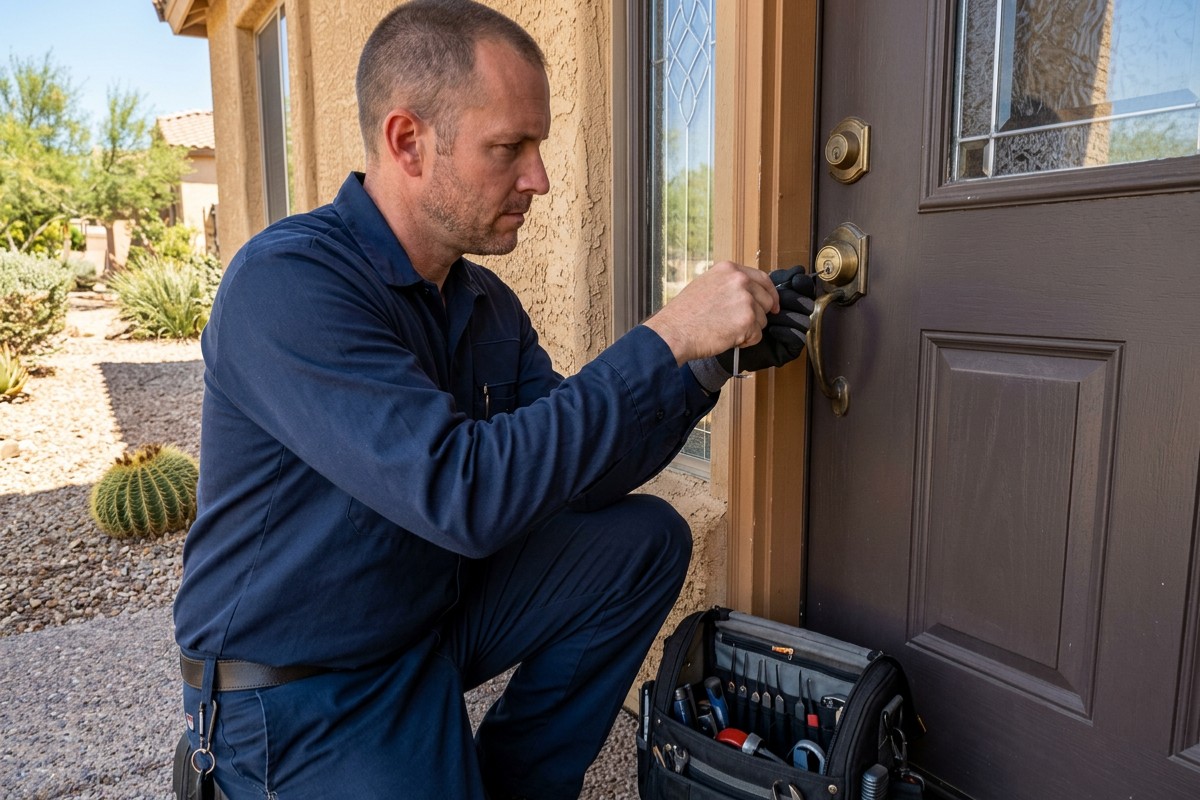
Mobile locksmith opening a residential front door lock during a home lockout service call in Phoenix AZ

Locked Out in the Phoenix Heat? Here’s What to Do (And Who to Call)

It happens to the best of us. You step outside to grab the mail, the door clicks shut behind you, and suddenly you’re standing in 110-degree Phoenix heat with no keys, no wallet, and no way back inside. Whether it’s your front door, car, or garage, a lockout in the Valley of the Sun isn’t just inconvenient — it can be genuinely dangerous when temperatures spike the way they do here from May through September.

At AZ Locksmith & Garage Repair, we get calls like this every single day. So we put together this quick guide to help Phoenix homeowners and drivers know exactly what to do — and what not to do — when they’re locked out.

Stay Calm and Stay Safe First

Before you do anything else, get out of the sun. Phoenix heat is no joke, and heat exhaustion can set in faster than most people expect. If you’re locked out of your home, move to a shaded area — a porch overhang, a neighbor’s entryway, or inside your vehicle if you have access to it. If you’re locked out of your car in a parking lot, find a shaded area nearby or step into a nearby store.

If you have children or pets locked inside a hot vehicle, call 911 immediately. That is always the first call in that situation — no exceptions.

Don’t Try to Force It

We know it’s tempting. But attempting to force open a locked door — whether it’s your front door, a deadbolt, or your garage — almost always makes the situation worse. Here’s what we see on a regular basis:

  • Bent door frames from people trying to “credit card” a deadbolt (that only works in the movies)
  • Broken door handles from forcing the mechanism
  • Damaged garage door panels from trying to manually override the system without knowing how
  • Locked out permanently after a DIY attempt jams the lock cylinder

What costs $80–$150 for a professional lockout service can turn into a $400–$800 repair job when the wrong tool meets the wrong lock. Save yourself the headache and the money.

Check Your Options Before You Call

Before you call a locksmith, it’s worth doing a quick 60-second check:

  • Back door or side door: Did you leave another entry point unlocked?
  • Garage door keypad: Many Phoenix homeowners have a keypad on the outside of the garage. If you know the code, this is your fastest way in.
  • Spare key with a neighbor: This is exactly why we recommend leaving one with a trusted neighbor.
  • Smart lock app: If you have a smart lock installed, check your phone — you may be able to unlock remotely.

If none of those work, it’s time to call a professional.

What to Expect When You Call a Local Phoenix Locksmith

When you call AZ Locksmith & Garage Repair at (602) 806-7771, here’s what happens:

We’ll ask for your location, the type of lock or entry point you’re dealing with, and a quick description of the situation. We’ll give you an honest estimated arrival time — we serve the greater Phoenix area and work hard to get to you fast, especially during extreme heat situations.

When our technician arrives, they’ll verify your identity and ownership (this is standard practice for any legitimate locksmith — if a company skips this step, that’s a red flag). Then we get to work using professional tools that open the lock without damaging it. In most standard residential lockout situations, you’ll be back inside in under 15 minutes.

A Word About Locksmith Scams in Phoenix

Unfortunately, locksmith scams are real and they’re common in metro areas like Phoenix. Watch out for companies that quote you one price on the phone and then dramatically inflate it at the door, or arrive in unmarked vehicles with no ID. Always ask for a business name, check their Google reviews, and confirm pricing before work begins. AZ Locksmith & Garage Repair is a locally owned Phoenix business with a 5-star rating — you can read our reviews before you ever pick up the phone.

Be Ready Before It Happens Again

Once you’re back inside, take 10 minutes to prevent this from happening again:

  • Hide a spare key with a trusted neighbor (not under the mat)
  • Set up a garage door keypad if you don’t already have one
  • Consider upgrading to a smart lock for keyless entry
  • Save a local locksmith number in your phone — (602) 806-7771

Locked Out in Phoenix? We’re Ready to Help

Whether you’re stuck in Scottsdale, Tempe, Chandler, or right in the heart of Phoenix, AZ Locksmith & Garage Repair is your local, trusted solution for lockouts, garage door issues, and more. We’re real people, based right here in the Valley, and we treat every call like it matters — because to us, it does.

Call us anytime at (602) 806-7771 or visit az-locksmith-garage.com to learn more about our services.

Garage Door Spring Repair in Phoenix AZ

Garage Door Spring Repair in Phoenix AZ

When a garage door spring snaps in Phoenix, the door becomes dead weight — the opener motor alone cannot lift it, and forcing it risks damaging the trolley carriage, bending the track, and burning out the motor within a few cycles. The spring is the load-bearing component of the entire system, and a failure almost always requires same-day repair to restore safe operation.

Phoenix homeowners face accelerated spring failures compared to the national average for one specific reason: thermal cycling. Summer temperatures inside an uninsulated garage routinely exceed 130°F, causing the steel coils to expand and contract with every degree of temperature change. That daily expansion and contraction creates micro-stress fractures inside the coil that accumulate invisibly — until the spring snaps without warning, often with a sound like a gunshot, while the car is parked inside or the door is mid-travel.

Our mobile technicians at AZ Locksmith & Garage Repair respond to spring failures across Phoenix day and night, seven days a week. We arrive with torsion springs sized for all standard residential door heights and weights, and we provide a written quote for your review and approval before any work begins — no surprises, no hidden fees. See our location and read reviews from Phoenix homeowners on Google Maps before you call.

Every spring repair starts with a full inspection of the spring system, cables, drums, and bearing plates — not just the broken coil. A spring rarely fails in isolation, and identifying related wear before it becomes a secondary failure is what separates a one-visit repair from a callback.


Why Phoenix Destroys Garage Door Springs Faster Than Anywhere Else

Torsion springs are rated by cycle count — the number of times the door opens and closes before the spring reaches the end of its designed lifespan. A standard builder-grade spring is rated for 10,000 cycles. In a moderate climate, with a household averaging 4 door cycles per day, that works out to roughly 7 years of service life.

In Phoenix, that math breaks down. The issue isn’t just use frequency — it’s the thermal environment the spring lives in. Steel expands when heated and contracts when cooled. In Phoenix, the delta between a 115°F summer afternoon and a 70°F desert night is roughly 45 degrees. Every day, the spring coil goes through that expansion and contraction cycle on top of its operational wind and unwind cycles. The stationary cone — the fixed anchor point of the torsion spring — is where this combined stress concentrates, and it’s where the vast majority of Phoenix spring failures originate.

Lubrication failure compounds the problem. Garage door springs require periodic lubrication to reduce friction between coil windings during operation. At 130°F, standard spring lubricant breaks down significantly faster than manufacturer service intervals assume. A dry spring in Phoenix generates more internal friction with every cycle, accelerating the micro-fracture process and shortening the effective service life by years.

What this means practically: a builder-grade 10,000-cycle spring installed during home construction in Phoenix may reach failure in 4–5 years rather than 7. If your home was built more than 5 years ago and the springs have never been replaced, they are likely operating well past their safe service life.


Torsion Springs vs. Extension Springs — What Your Phoenix Home Has

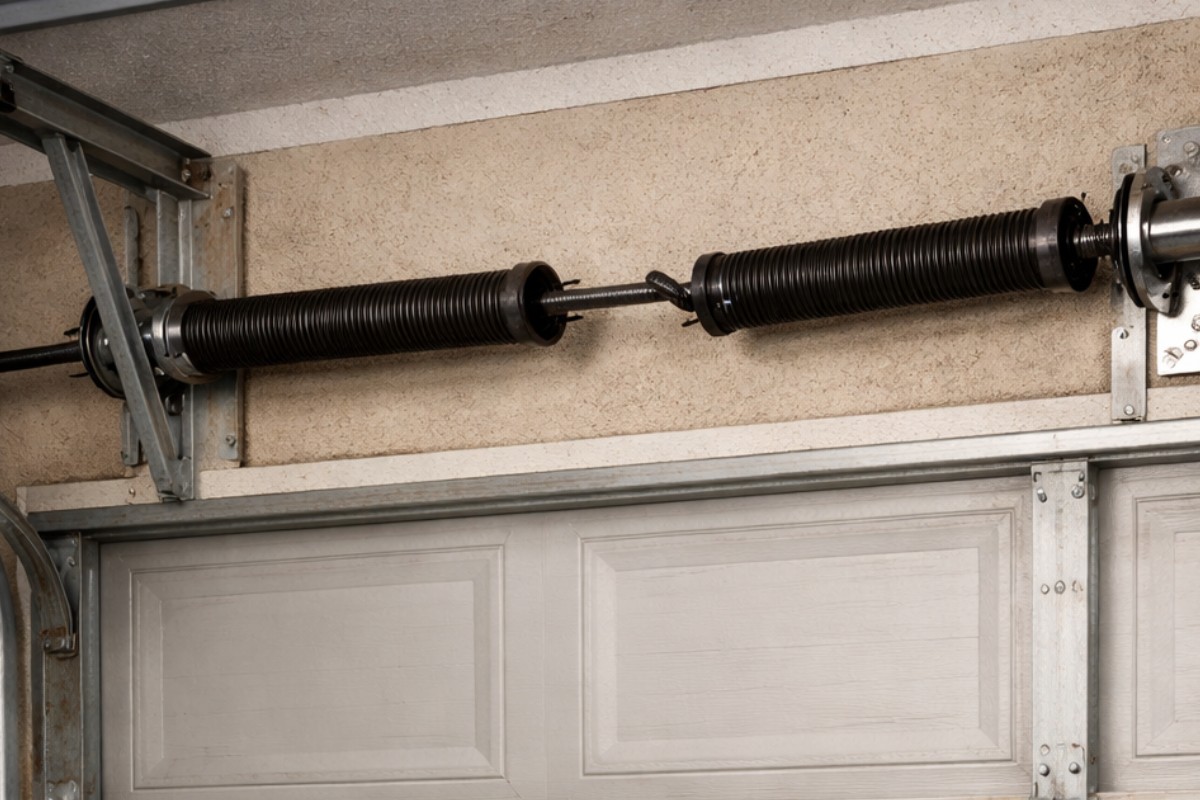
Most Phoenix homes built after the early 1990s use a torsion spring system: one or two springs mounted on a steel shaft centered above the door opening, connected via cables to drums on each end of the shaft. The spring stores energy by winding as the door closes and releases it as the door opens, doing the majority of the lifting work. When a torsion spring fails, the broken coil stays on the shaft — contained and visible as a gap in the coil.

Older homes and lighter single-car doors in Phoenix sometimes use extension springs: two springs mounted horizontally along the upper tracks on each side, stretching as the door closes and contracting as it opens. Extension springs are less expensive but more dangerous when they fail — without a properly installed safety cable running through the spring center, a broken extension spring can become a projectile.

Our garage door torsion spring installation and replacement service covers both types. We stock high-cycle springs rated for 25,000–30,000 cycles — the correct specification for Phoenix’s thermal environment — and we’ll confirm which system your door uses when you call.

Never attempt to remove or wind a torsion spring yourself. A fully wound torsion spring stores enough mechanical energy to cause severe injury or death if a winding bar slips or the spring is disturbed without proper equipment and technique.


Quick Diagnosis — What Your Door Is Telling You
Symptom Likely Cause What a Pro Checks
Loud bang, door won’t move Torsion spring snapped Spring integrity, visible gap in coil, cable tension, drum alignment
Door opens a few inches then stops Opener safety limit triggered by spring load Spring condition, opener force settings, motor thermal state
Door crooked — one side lower One spring failed in dual-spring system Both springs — replace as a matched pair
Door feels extremely heavy manually Spring losing tension near end of life Remaining spring cycles, cable drum wear, balance test
Visible gap in spring coil above door Spring already broken Full spring replacement, safety cable and drum inspection
Cables hanging loose on both sides Spring failure caused cables to unspool Spring, cable, drum, and bearing plate — full system check

What the Spring Repair Process Looks Like

When an AZ Locksmith & Garage Repair technician arrives at your Phoenix home, the repair follows a structured sequence — spring replacement is never just a parts swap.

The first step is a full system assessment: spring type, wire diameter, coil count, drum condition, cable integrity, bearing plate wear, and bottom bracket condition. This takes 10–15 minutes and determines whether the repair is isolated to the spring or whether cables, drums, or other hardware need attention in the same visit. We provide a written quote at this point — you approve the work before anything is touched.

Spring removal is performed using proper winding bars to safely unwind the remaining tension in the broken spring before the hardware is disturbed. The replacement spring — sized to your door’s weight and height — is installed on the shaft, tensioned to the correct wind count, and the cables are re-tensioned to match.

After installation, we run a balance test: the door is released at mid-travel and should hold position without drifting up or down. An unbalanced door means the spring wind count needs adjustment. We then verify the opener’s force calibration settings, since a new spring changes the load profile the motor operates against.

If the garage door track, rollers, or cables took any damage during the spring failure — which happens when the door drops unevenly — we address those in the same visit. Most Phoenix spring repairs are completed in 45–75 minutes. You can also see the full scope of our garage door repair services and our opener installation and repair options if the spring failure caused opener damage.


Frequently Asked Questions

How do I know if my garage door spring is broken? +
The most common signs are a loud bang from the garage followed by a door that won’t move, a visible gap in the spring coil above the door, or cables hanging loose on one or both sides. The opener may still run but the door will only move a few inches before the motor’s safety limit stops it. Do not force the door open manually — without spring tension, the full weight rests on the track and hardware.
Can I use my garage door opener with a broken spring? +
No. Running the opener without spring tension forces the motor to lift 150–300 lbs of dead weight, which overloads the drive gear, triggers the thermal cutoff, and can burn out the motor within a few cycles. Most modern openers will stop the door after a few inches as a safety measure — this is the system working correctly. Leave the door in place and call for service.
How long do garage door springs last in Phoenix? +
Builder-grade springs rated for 10,000 cycles typically last 4–6 years in Phoenix with average daily use. High-cycle springs rated for 25,000–30,000 cycles can reach 15–20 years under the same conditions. Arizona’s extreme heat and daily thermal cycling accelerate metal fatigue significantly faster than the same hardware performs in cooler climates.
Should I replace both springs if only one broke? +
Yes. Both springs have accumulated the same number of cycles and lived through the same thermal stress. If one failed, the other is at the same risk level and will likely fail within weeks or months. Replacing both together costs less than two separate service calls and keeps the door lifting evenly from day one.
What does garage door spring repair cost in Phoenix? +
Cost depends on spring type, wire gauge, cycle rating, and whether one or both springs need replacement. We provide a written quote before any work begins — call (602) 806-7771 and describe what you’re seeing and we’ll give you an estimate before we dispatch. There are no hidden fees and no work starts without your written approval.
Do you service all garage door brands? +
Yes. Our technicians carry springs sized for all standard residential door heights and weights and work on all major brands including Clopay, Amarr, Wayne Dalton, and CHI. Call (602) 806-7771 with your door model if you have it — we’ll confirm parts availability before we dispatch.
How long does spring repair take? +
A standard torsion spring replacement — single or dual — takes 45–75 minutes on most Phoenix residential doors. If cables or drums also need attention, add 20–30 minutes. We carry all standard spring sizes on every truck to complete most jobs in a single visit.

Before You Touch That Spring

A broken torsion spring is one of the few garage door repairs where the risk of DIY is severe enough that no qualified technician will recommend attempting it without proper training and equipment. The right next step is a same-day inspection and written quote — not a parts order.

AZ Locksmith & Garage Repair serves Phoenix homeowners from our base at 9830 S 51st St, B-122 in the Ahwatukee area, with mobile technicians available day and night, seven days a week. We stock high-cycle torsion springs on every truck and provide a written quote before any work begins — no pressure, no hidden fees.

Call (602) 806-7771 to request service. You can also visit our contact page or learn more about our team on our about page. We’re available Monday through Sunday, 7:00 AM to 9:30 PM.